
Government pays tribute to Portuguese diplomats who saved lives from Nazi persecution
"Only today has the Palácio das Necessidades, the home of Portuguese diplomats, truly welcomed Aristides de Sousa Mendes", stated Santos Silva
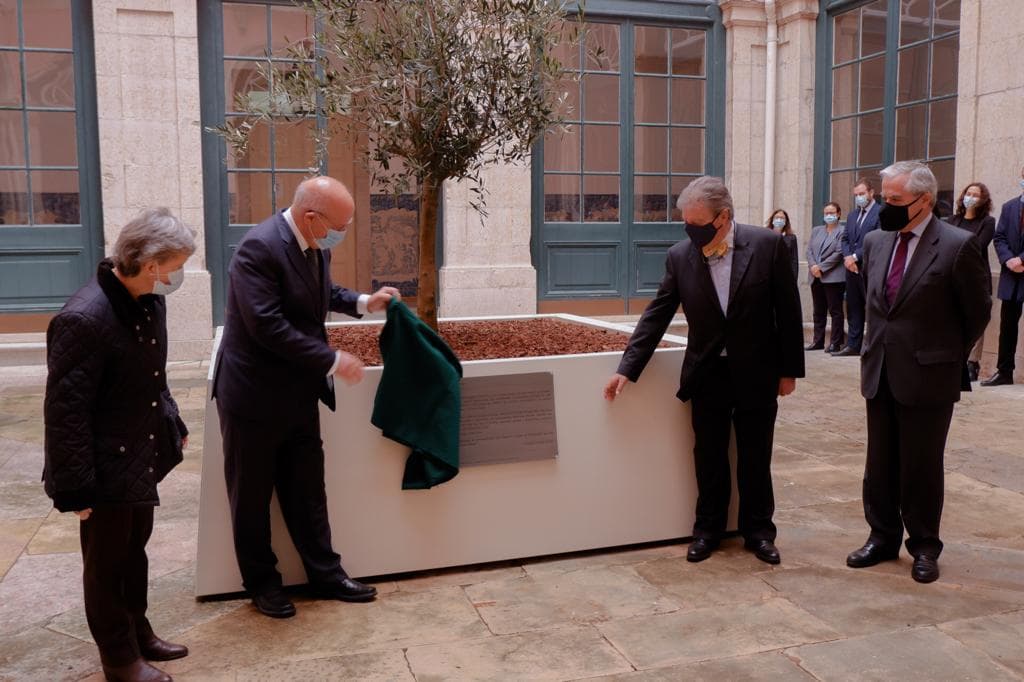
Minister of State and Foreign Affairs, Augusto Santos Silva, inaugurating the space in tribute to the saviour diplomats at Palácio das Necessidades, Lisbon, 10 December 2021
Minister of State and Foreign Affairs, Augusto Santos Silva, inaugurating the space in tribute to the saviour diplomats at Palácio das Necessidades, Lisbon, 10 December 2021

Aristides de Sousa Mendes, Carlos Sampaio Garrido, Alberto de Lis-Teixeira Branquinho and all the Portuguese diplomats who saved lives during the Holocaust now have a space in their honour at the Palácio das Necessidades, the Ministry of Foreign Affairs’ headquarters in Lisbon.
An olive tree, symbol of peace, was placed in the palace cloisters, together with a plaque for "the diplomats and other workers at Portuguese Embassies and Consulates who contributed to the protection and rescue of thousands of people, namely Jews, persecuted by the Nazi regime and its allies", where we can also read "they therefore deserve to be remembered".
The initiative, under the Never Forget Project – the National Programme for the Memory of the Holocaust, was presided over by the Minister of State and Foreign Affairs, Augusto Santos Silva, who, during the ceremony paying tribute to the diplomats underlined the "reparation" owed to Aristides de Sousa Mendes (1885-1954), Consul in Bordeaux in 1940 and the Portuguese diplomat who saved the most lives from Nazi persecution.
"To a certain extent, only today has the Palácio das Necessidades, the home of Portuguese diplomats, truly welcomed Aristides de Sousa Mendes", claimed the Minister, recalling how Sousa Mendes was expelled following his acts, which went against the orders from the regime of the time, and the "long path to reparation that began here in May 1976, when Melo Antunes asked that his professional file be reassessed, urgently". This would only take place in 1988, when he was reinstated in his diplomatic career, as Ambassador.
Respect for human rights should be reflected in public services
On International Human Rights Day, during the session in honour of the diplomats who saved people who were persecuted by the Nazis during World War II (1939-1945), the Minister of State and Foreign Affairs, Augusto Santos Silva claimed that respect for human rights starts in the classroom, yet also in the way in which public services handle those "from socially peripheric groups".
"Recognising rights starts there, too, in the respect for rights granted to such and such a person when he or she is processing their identity documents, or enrolling their children at school, or paying their rent, or in a legal suit", he stated.