
i063391

Summit demonstrated "the perfect friendship between our countries and peoples"
Portugal and Brazil signed 19 cooperation agreements
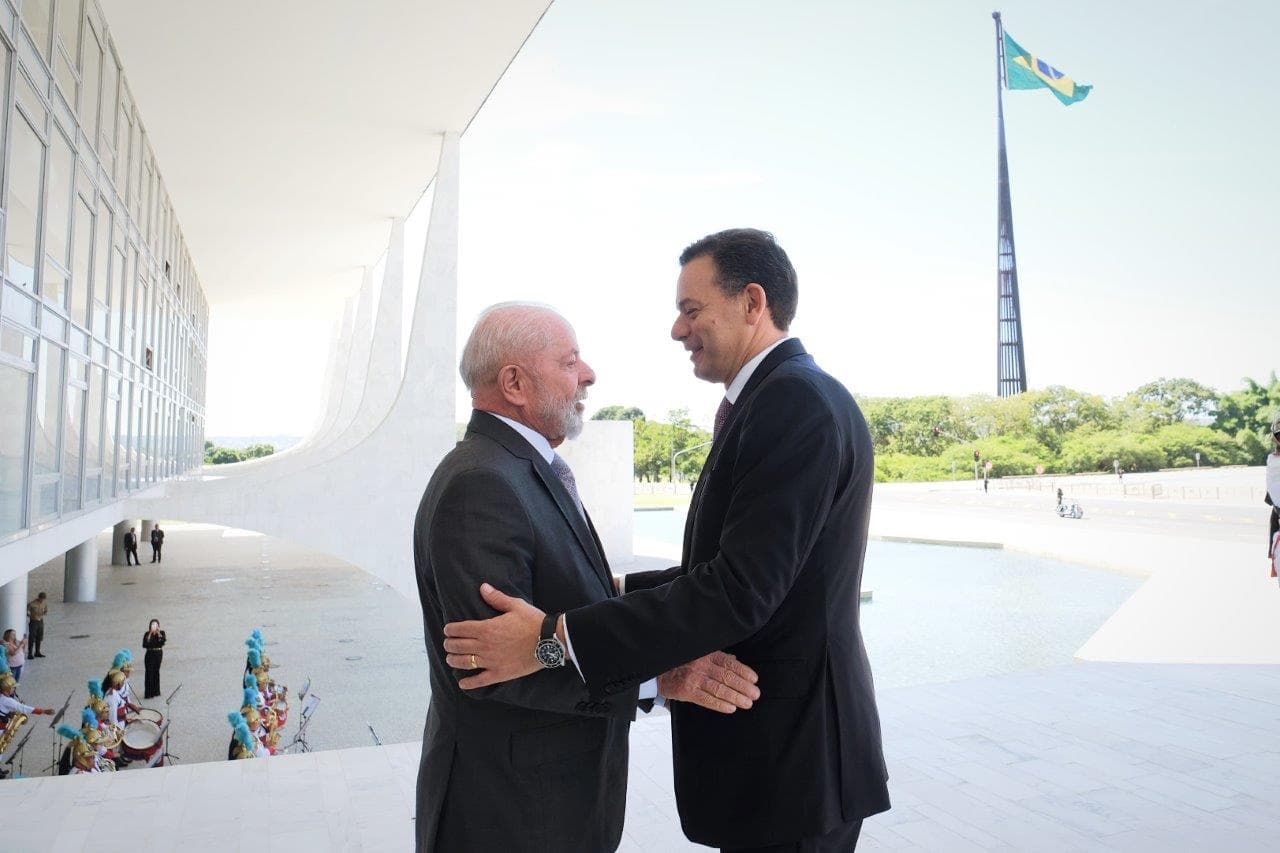
Prime Minister Luís Montenegro greeted by the President of Brazil Lula da Silva upon arrival at the summit, Brasilia, 19 February 2025 (photo Gonçalo Borges Dias/GPM)
Prime Minister Luís Montenegro greeted by the President of Brazil Lula da Silva upon arrival at the summit, Brasilia, 19 February 2025 (photo Gonçalo Borges Dias/GPM)
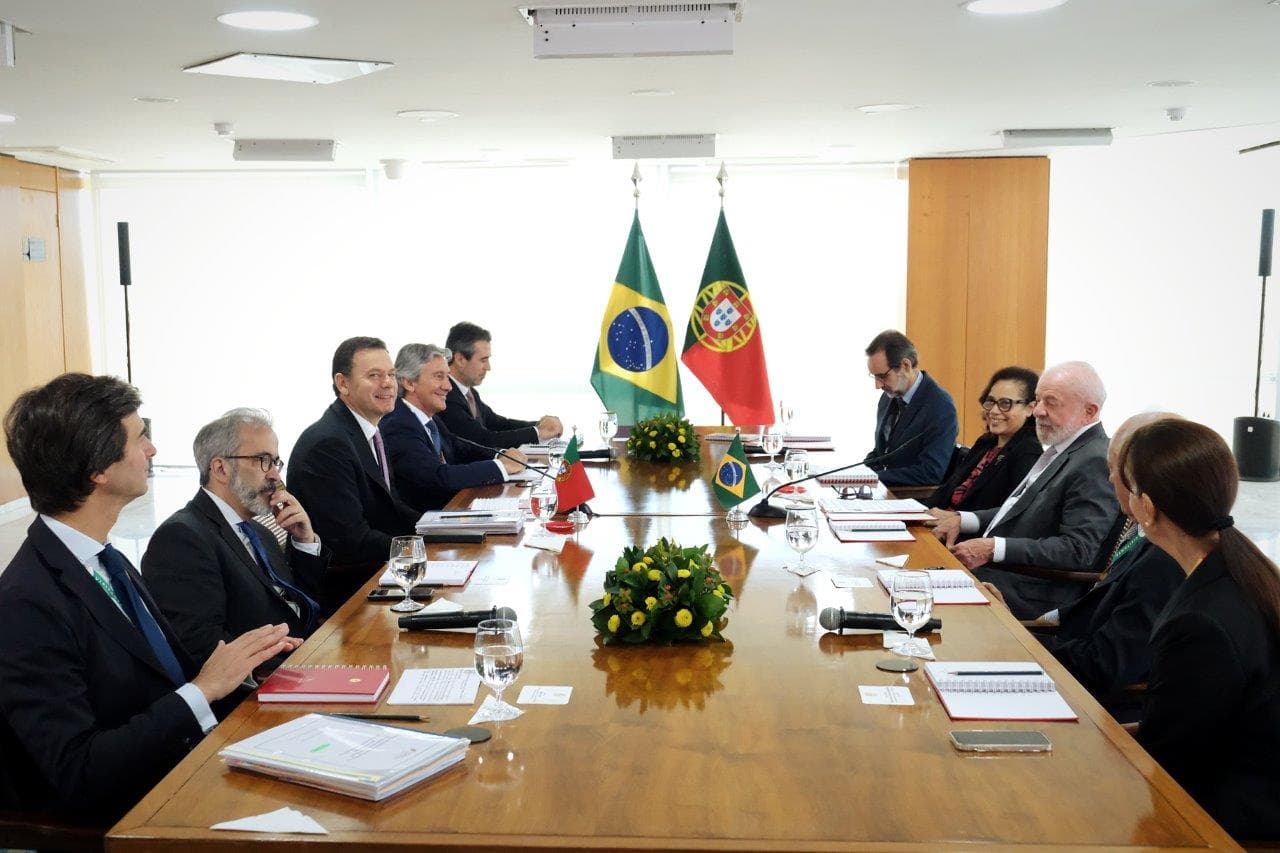
Portugal and Brazil signed 19 bilateral agreements at the 14th Luso-Brazilian Summit held in Brasilia. In addition to the Heads of both Governments, Luís Montenegro and Luís Inácio Lula da Silva, 11 Portuguese Ministers, the Vice-President and Minister of Development, Trade and Services, Geraldo Alckmin, and 16 other Brazilian Ministers were also in attendance.
The Summit signals the start of a new stage in the bilateral relations, building a collaboration that is more ambitious and in line with the common challenges and opportunities.
The commitments undertaken strengthen competitiveness, drive trade and foster sustainable and inclusive development.
Decisive step
Portugal and Brazil take a decisive step in deepening a strategic partnership by signing these 19 agreements that boost cooperation in the fields of the economy, innovation, sustainability, security, and research.
With a consolidated partnership and a shared vision of the future, both countries set up new opportunities for citizens and companies, while reinforcing their role in international cooperation.
The summit was held at Planalto Palace in Brasilia, a meeting between Luís Montenegro and Lula da Silva, followed by sector ministerial meetings and the plenary meeting.
200 years of diplomatic relations
At the end, the 19 agreements were signed, and both Heads of Government gave a press conference where the Prime Minister noted the "great content", adding that "it embodied the 200 years of diplomatic relations" between both countries, following "the principle of the perfect friendship that unites our countries and peoples".
Luís Montenegro also stated that "the principle that governed our talks and decisions was that of serving the people", stressing the humane dimension of the bilateral relations due to the size of the Brazilian and Portuguese communities in either country, and thanked the Brazilians for their assistance in developing the Portuguese economy.
EU/Mercosul
The Prime Minister claimed that Portugal will continue to be an unwavering advocate of enforcing the trade agreement between the European Union and Mercosul, as "it opens the gates to the creation of a regulated, mutually fair-trade relation between the two regions that bring together more than 700 million people, with a significant share of global GDP".
Luís Montenegro stated that if the Europeans do not enforce the agreement, Mercosul, which includes Brazil, Argentina, Uruguay, and Paraguay "is open to other trade blocs" that can "invade it in an unregulated manner, from a non-loyal perspective when it comes to competition and international trade".
He also indicated that with TAP’s privatisation "regardless of our decision", "there is one thing that is undeniable: the specifications will mandatorily include maintaining the lines and routes that bring us and connect us to Brazil" adding that Portugal has "a strategic interest" in the "flight connections between Portugal and Brazil".
Zero tolerance
The Prime Minister also noted that "the overwhelming majority of the Portuguese has no tolerance of xenophobia," namely targeting Brazilians.
"We have zero tolerance of those who engage in such behaviour, first off by preventing it and then unequivocally repressing any temptation to head in that direction, protecting people who may be more exposed to such phenomena", he added.
19 agreements
The agreements cover areas such as countering international crime and terrorism, protecting classified information, harmonising standards and certifications to ease trade, the sustainable development of tourism, logistics connectivity between ports, cooperation in the agriculture and food sector, and exporting wines.
They also include biomedical research, pharmaceutical innovation and overall health, with four agreements between several Portuguese and Brazilian institutions, namely setting up the Global Health Innovation Centre.
The agreements in the cultural area drive the creation and circulation of production between both countries and reinforce museum management, enhancing the historical heritage, and digitalising archives.
Agreements were also signed to recognise engineer qualifications, the exchange of initiatives for environmental and climate protection, and exchanging the modernisation of digital public services.