European Union boosts Ukrainian support and moves forward on Mercosul agreement
Prime Luís Montenegro noted the consensus on support to Ukraine and advocated for rapidly signing the EU-Mercosul agreement
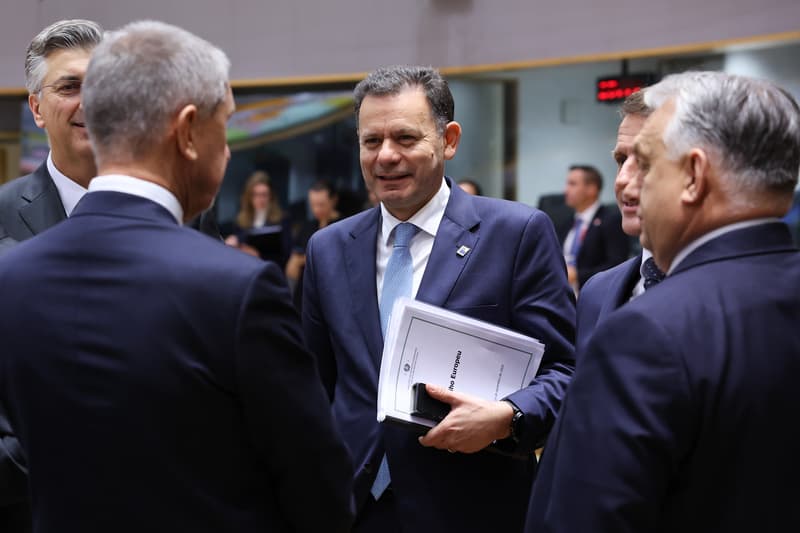
Prime Minister Luís Montenegro with other Heads of Government, European Council, Brussels, 19 December 2025 (EU)
Prime Minister Luís Montenegro with other Heads of Government, European Council, Brussels, 19 December 2025 (EU)

The European Council convened in Brussels the EU Heads of State and Government to discuss boosting support to Ukraine given the Russian aggression, the multiannual financial framework, and materialising the EU-Mercosul trade agreement.
Support to Ukraine
"The European Union was put to the test, but rose up to the challenge", stated the Portuguese Prime Minister Luís Montenegro, stressing that "this was a very important European Council meeting".
Luís Montenegro stressed first off, the decisions on supporting Ukraine’s defence against the Russian aggression, namely regarding funding its immediate needs. "We knew the discussion would be complex, difficult indeed, but in the end, we reached consensus", he said.
A 90-billion-euro loan was agreed on, to be funded by the joint debt issued by the European Union in the financial markets and backed by the Union budget.
At the same time, the work to use the immobilised Russian assets will continue, since the continuity of this process was agreed "until full reparation of the entire war responsibilities" by Russia is met.
The European Commission was tasked to continue the technical and legal undertakings to allow the Ukrainian efforts to be funded through this, also. "The continuity of the support necessary to continue preserving Ukraine’s capacity and ensure its defence, which is also our defence, our principles and values was guaranteed", he noted.
European budget
The European Council likewise addressed the multiannual financial framework, namely its core architecture and discussion timeline with a view to concluding it by the end of next year.
Portugal reaffirmed "the strong purpose of ensuring protection of our cohesion policy and our agriculture", as well as guaranteeing specific treatment of the ultraperipheral regions, to with the Madeira and Azores autonomous regions.
The Prime Minister further stressed the importance of ensuring "equitable treatment" in the future Competitiveness Fund through a territorial distribution that guarantees equal access and opportunities given the specificities of each Member State’s economic fabric. In the Portuguese case, he remarked, this is made up primarily of small and medium-sized enterprises.
The discussion will be resumed at upcoming European Council meetings and, according to Luís Montenegro, Portugal will be "highly committed" during this process.
Mercosul agreement
As for the trade agreement between the European Union and Mercosul, the Prime Minister claimed to have made it "very clear that it was not acceptable" to leave this meeting without a decision as to its materialisation.
Luís Montenegro stressed that the lack of advancement in implementing an agreement negotiated over 25 years is "a sign of weakness", noting the importance of the European Union not being excessively dependent on a sole trade partner.
Portugal "insisted significantly" for guarantees given that signing the agreement "could happen swiftly" and the Council reached a pre-decision in the sense of taking this step at the start of next year.
"The resistance that still exists in some Member States has been nearly overcome", the Prime Minister stated, adding that there are enough reasons for the process to be "practically closed".
According to Luís Montenegro, the European Union’s credibility depends on its capacity to materialise the strategic decisions it takes. "Europe cannot keep stating the strategic direction of the path it wishes to go on without materialising the decisions it takes", he concluded.