Government creates committee to celebrate the 900th anniversary of Portugal’s foundation
Committee will be headed by Paulo Portas and include all Presidents of the Republic
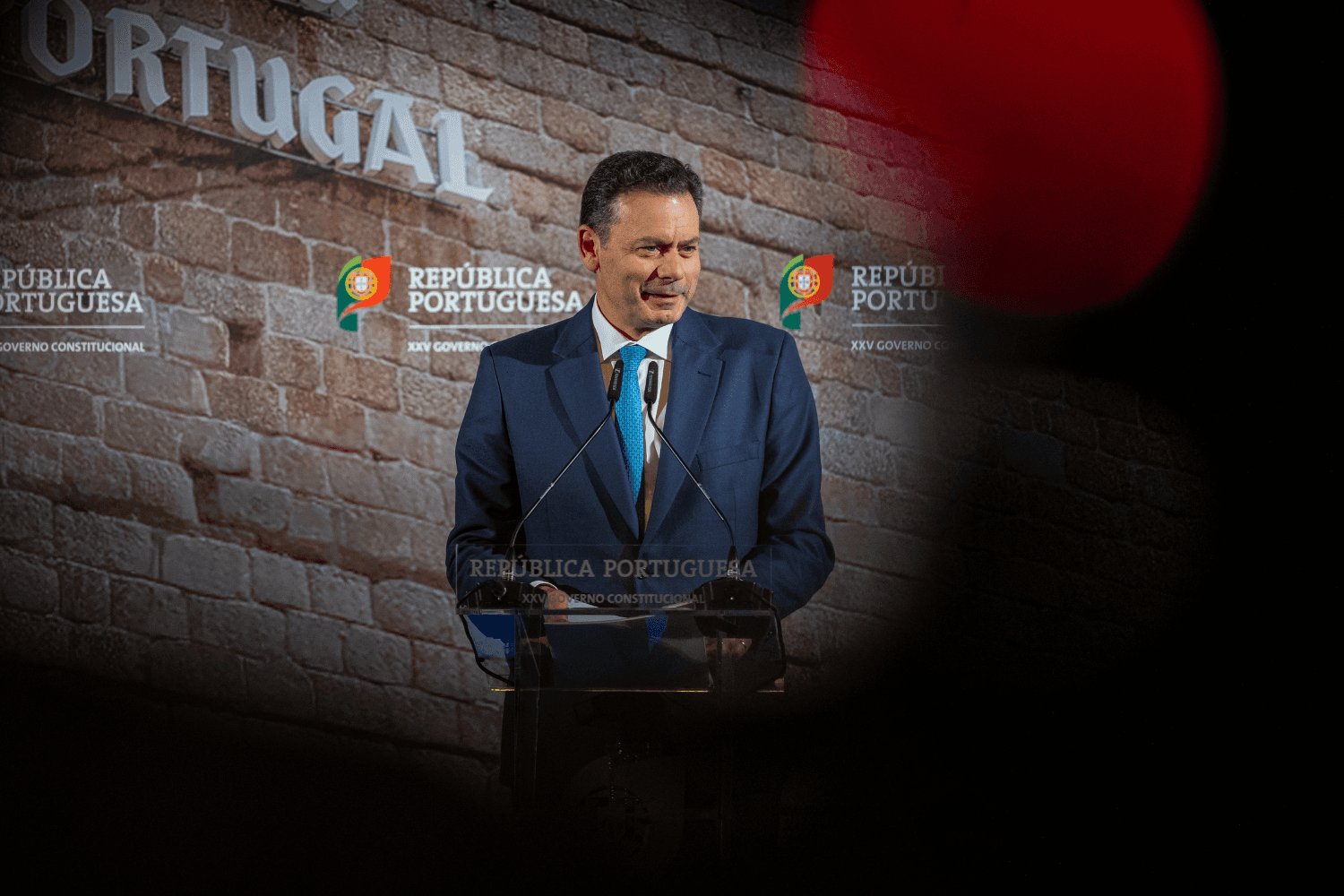
Prime Minister Luís Montenegro speaks at the press conference following the Council of Ministers Meeting at the Dukes of Braganza Palace in Guimarães, 03 July 2026. (SGGov, Maria Costa Lopes)
Prime Minister Luís Montenegro speaks at the press conference following the Council of Ministers Meeting at the Dukes of Braganza Palace in Guimarães, 03 July 2026. (SGGov, Maria Costa Lopes)

The Government approved the creation of a committee to organise the celebrations marking the 900th anniversary of Portugal’s foundation. The decision was announced by Prime Minister Luís Montenegro following the Council of Ministers meeting held at the Palace of the Dukes of Braganza in Guimarães.
According to the Prime Minister, the celebrations are intended to deliver a programme that will enable Portugal to "deepen its understanding of our historical roots, our identity and our culture", while reinforcing "the sense of being Portuguese and of belonging to one of the world's oldest nations".
The commemorations will focus on Portugal's founding period, beginning with the Battle of São Mamede, fought in Guimarães in 1128, and also encompassing the Battle of Ourique in 1139 and the Treaty of Zamora in 1143.
The Prime Minister announced that Paulo Portas will serve as Commissioner-General and chair the executive committee responsible for the celebrations. An honour committee will also be established, chaired by the President of the Republic, António José Seguro, and including former Presidents Ramalho Eanes, Aníbal Cavaco Silva and Marcelo Rebelo de Sousa.
Simpler rules and stronger incentives for cultural patronage
The Minister for Culture, Youth and Sport, Margarida Balseiro Lopes, described the day as "a good day for culture", stressing that the Government is reaffirming its commitment to "create the conditions for culture to grow, prosper and reach its full potential".
The Council of Ministers approved the Decree-Law on Cultural Patronage, strengthening incentives for private individuals, companies and civil society organisations to support cultural activities.
"Culture cannot rely solely on the State or the public sector," the Minister said, arguing that the Government must create better conditions for greater private participation in the cultural sector.
Among the main changes is an increase in the tax incentive for cultural donations from 130% to 140%. The ceiling for eligible donations will also rise from 0.8% to 1% of a company's turnover.
The new legislation also introduces the status of "cultural initiative", allowing individual projects to receive private support regardless of the legal status of the promoting organisation, provided they meet the established eligibility criteria.
National Theatre of São Carlos moves to the third phase of renovation works
The Council of Ministers approved €17.5 million in funding for the third phase of the renovation works at the National Theatre of São Carlos in Lisbon.
The theatre has been closed since August 2024 while renovation works funded under the Recovery and Resilience Plan are carried out. Those works cover only the first two phases of the project, amounting to €26.8 million. The third phase is not included in that funding and will instead be financed through the State Budget.
Portugal's only national opera house is expected to reopen to the public in 2028.
National Council for Culture strengthened
The Government also approved a revision of the National Council for Culture, the Government's advisory body on cultural policy, with the aim of strengthening consultation with the cultural sector and ensuring greater transparency and pluralism.
Museums and monuments staff to receive supplement for working on public holidays
The Government also approved an amendment to the Decree-Law establishing Museums and Monuments of Portugal, E.P.E., allowing frontline staff responsible for visitor services to receive an availability allowance when working on public holidays.
The supplement amounts to €60 for each public holiday worked and stems from an agreement reached with trade union representatives following several months of negotiations involving the Ministries of Finance and Public Administration.
Investment in specialised arts education
The Council of Ministers also approved a €173 million investment to strengthen specialised arts education.
The funding will support additional students in music, dance, theatre, visual arts and audiovisual studies, while reinforcing the long-term sustainability of the network of private and cooperative specialised arts schools.